System Design
Architecting a Multi-Tenant Player Portal: Scalable Systems for Gaming CRM Frameworks
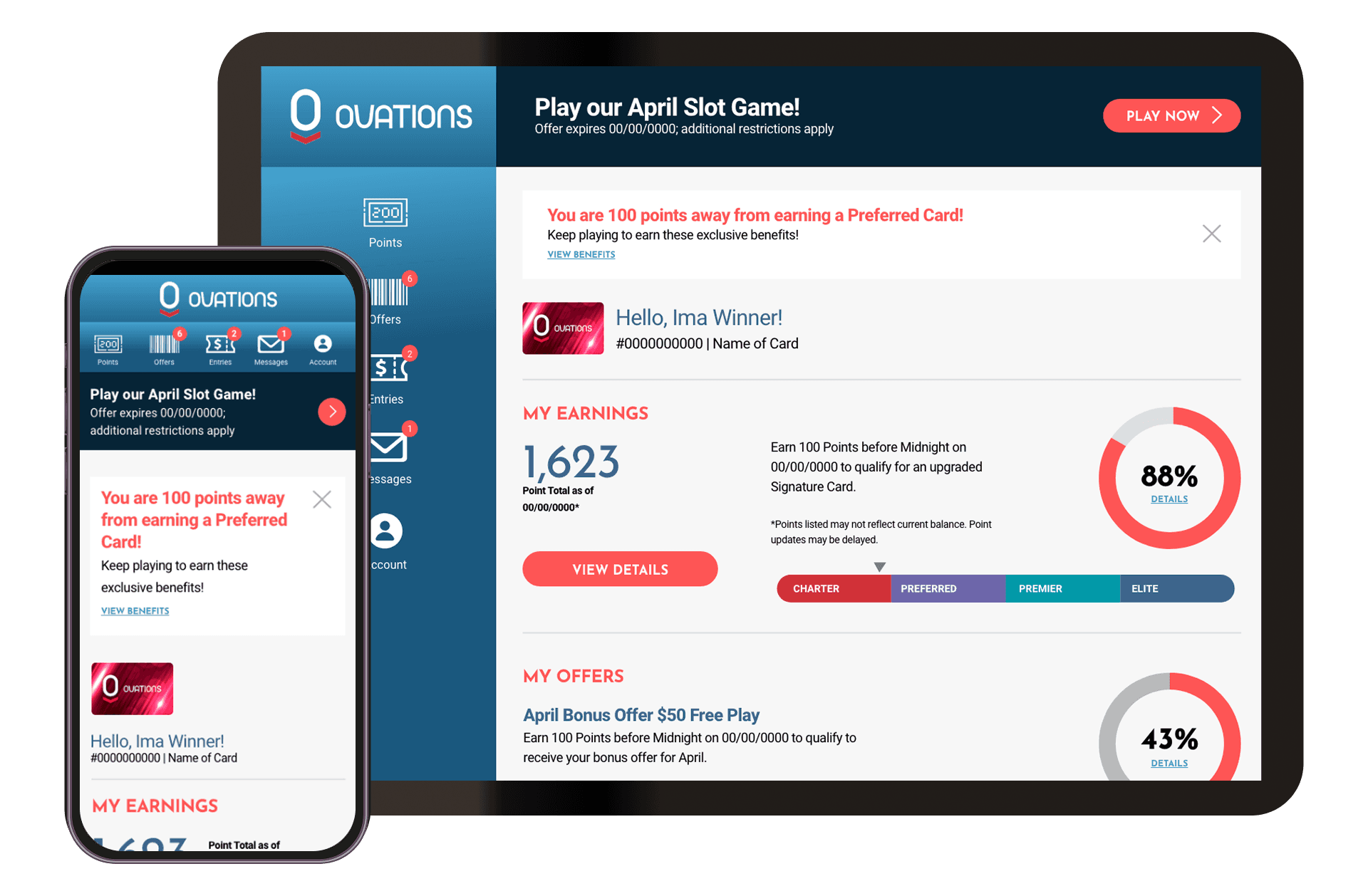
The design and structural orchestration of the white-label Casino Player Portal for Marketing Results required a highly adaptive UI framework engineered for multi-tenant deployment across independent gaming properties. Serving as the lead digital architect on the initiative, my mandate was to design a highly scalable, data-dense digital product that provided casino patrons with real-time access to their loyalty tiers, dynamic perks, and account tracking metrics. A core technical requirement of the platform was its native integration with Marketing Results' proprietary Advanced CRM software, establishing a secure, bi-directional data conduit that mapped player physical card usage directly to automated, digital loyalty tracking schemas.
My Role
White-Label Design System Architecture
Proprietary CRM Technical Integration
Multi-Platform Omnichannel UX
Data-Dense Interface Management
Future-Proof Scalability Planning
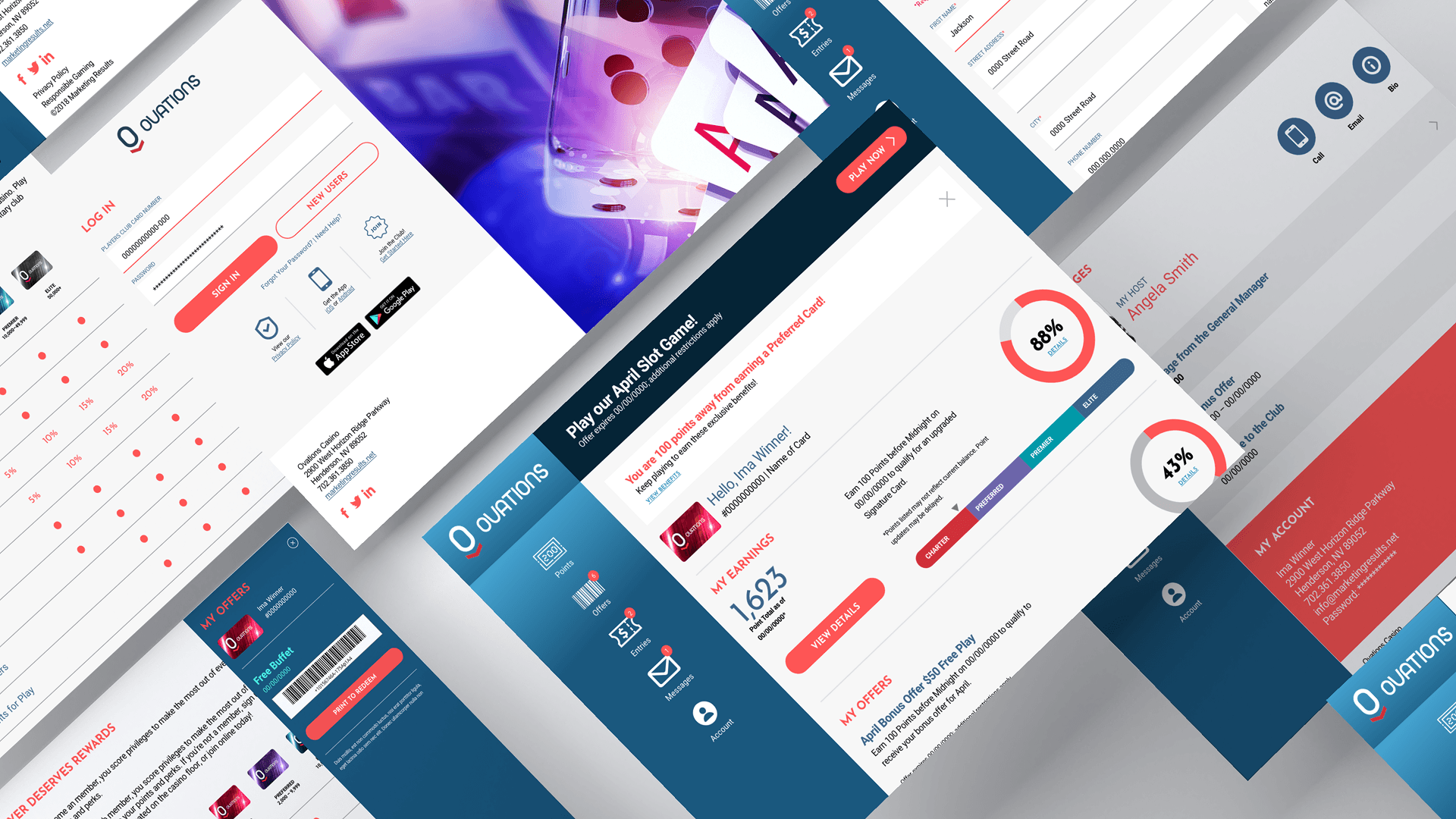
To maximize market capture across independent casino operators lacking in-house technical solutions, I engineered an architectural delivery model supporting three distinct integration vectors. For properties with pre-existing digital infrastructure, the system functioned as a standalone, side-loaded portal deployed via optimized iframe or API subdomains. For properties utilizing Marketing Results' full-service enterprise web solutions, the portal was deployed as a deeply integrated, native extension of the primary site architecture. Furthermore, the UI was tokenized and optimized for compilation as a hybrid mobile application, enabling location-aware geotargeting, proximity-based push notifications, and hardware-level card scanning options to sustain client lifecycle engagement down the road.
Looking back, this project was a major milestone for me because it was my very first exposure to true systems design. Before this, like many designers, I looked at websites as isolated, custom creations. But when you are tasked with building a white-label portal that has to live under a completely different set of brand variables for every single client, it forces you to think completely differently. You realize very quickly that you aren't just designing a user interface—you are building a living, organic environment. I fell in love with the challenge of creating layout matrices that had to remain bulletproof whether a casino’s branding was neon and high-energy or ultra-luxury and minimalist, all while handling complex layouts like tier progression bars, balance meters, and personalized reward grids.
This initiative really laid the groundwork for my understanding of scalability and product longevity. I learned that a successful design system can't be a rigid set of rules; it has to be flexible enough to handle the immediate operational needs of today while leaving room for features that might not even be conceived until years down the road. We carefully balanced the clinical, data-heavy requirements of a financial tracking CRM tool with the high-stakes, exciting visual language of the hospitality and gaming industry. Seeing the system successfully adapt across totally different aesthetics—shifting seamlessly from desktop web wrappers to location-tracked mobile app interfaces—completely redefined how I approach product design and set me on a permanent path toward mastering design systems.